カテゴリー: pregnancy

  • 倫理(Ethics): 妊娠中に診断されたがん:治療期およびサバイバー期における心理社会的経験の質的研究 (Cancer diagnosed during pregnancy: a qualitative study of women’s psychosocial experiences during treatment and survivorship)

    この論文が検索結果に表示された理由となる箇所は、Keyword欄および本文中でハイライト表示されます。

    (The content that matched your search query is highlighted in the Keyword section and/or within the article below.)

    Key word: 妊娠 (Pregnancy), がん (Cancer), 妊娠中のがん (Cancer During Pregnancy), 出産 (Childbirth), 育児 (Parenting), 意思決定 (Decision-Making), 心理社会的支援 (Psychosocial Support), サバイバーシップ (Survivorship), 不安 (Anxiety), 家族支援 (Family Support)

    研究(オープンアクセス)

    出版社原本 (Publisher)

    Cancer diagnosed during pregnancy: a qualitative study of women’s psychosocial experiences during treatment and survivorship

    Jenny Harris, Afrodita Marcu, Faith Gibson, Emma Ream, Karen Poole, Jane Stewart, Jo Armes.

    Support Care Cancer. 2026 Apr 23;34:458.

    Research article. Open Access.

    ■ まず、まとめると

    妊娠中にがんと診断された女性は、
    治療・出産・育児を同時に経験する中で、
    心理的・身体的・生活面の大きな負担を抱えることがある。

    一方で、適切な支援や医療体制によって、
    その負担を軽減できる可能性が示唆されている。

    👉 多職種による一体的なサポートが重要

    ■ 研究の概要

    • 英国の女性20名へのインタビュー研究
    • 妊娠中〜産後にかけての体験を分析
    • 心理的・社会的な課題に焦点

    ■ 明らかになった6つの側面

    ① 不確実性の中での治療

    • 妊娠により検査や治療に制約があることがある
    • 将来への不安を感じる場面がある

    ② 意思決定の難しさ

    • 治療・出産・授乳などの選択が重なる
    • 限られた情報の中で決断する必要がある

    ③ 妊娠・育児との両立

    • 通院や治療と育児の両立は負担が大きい
    • 産後すぐ治療が始まるケースもある

    ④ 仕事と経済面

    • 休職や収入減少が生じることがある
    • 通院や育児に伴う費用負担も課題

    ⑤ 感情面への影響

    • 不安や戸惑い、葛藤を感じることがある
    • 「嬉しいはずの妊娠」と「病気」の両立に悩む

    ⑥ 支援と回復

    • 孤立感を感じることもある
    • 治療後も不安が続くことがある一方、
      時間とともに整理されていく側面もある

    ■ この研究が示していること

    • 妊娠中のがんは「特別な状況」である
    • 医療だけでなく、心理・生活面の支援も重要
    • 支援のタイミングや方法は柔軟であるべき

    ■ 実臨床へのポイント

    • 情報提供と意思決定支援を丁寧に行う
    • 産科・腫瘍科・心理の連携
    • 家族も含めた支援体制
    • 治療後も継続したフォロー

    ■ 一言まとめ

    👉 「一人で抱えなくてよい状況をつくること」が重要


    First, a Brief Summary

    Women diagnosed with cancer during pregnancy may face substantial psychological, physical, and practical burdens as they undergo cancer treatment while also navigating childbirth and parenting.

    At the same time, the study suggests that appropriate support systems and coordinated healthcare can help reduce these challenges.

    👉 Integrated multidisciplinary support is essential.


    Study Overview

    • Qualitative interview study involving 20 women in the United Kingdom
    • Explored experiences from pregnancy through the postpartum period
    • Focused on psychosocial and practical challenges associated with cancer during pregnancy

    Six Key Themes Identified

    1. Treatment Amid Uncertainty

    • Pregnancy may limit certain diagnostic tests and treatment options.
    • Women often experience uncertainty and concerns about the future.

    2. Challenges in Decision-Making

    • Decisions regarding cancer treatment, childbirth, and breastfeeding often overlap.
    • Important choices must sometimes be made with limited information.

    3. Balancing Pregnancy, Parenting, and Treatment

    • Managing medical appointments and treatment alongside parenting responsibilities can be demanding.
    • In some cases, treatment begins shortly after delivery.

    4. Work and Financial Impact

    • Some women experience time away from work or loss of income.
    • Costs associated with healthcare, childcare, and travel may create additional burdens.

    5. Emotional Impact

    • Feelings of anxiety, confusion, and inner conflict are common.
    • Women may struggle to reconcile the joy of pregnancy with the reality of a cancer diagnosis.

    6. Support and Recovery

    • Some women experience feelings of isolation.
    • Although anxiety may persist after treatment, many gradually adapt and find ways to process their experiences over time.

    What This Study Suggests

    • Cancer during pregnancy represents a unique and particularly complex situation.
    • Support should extend beyond medical treatment to include psychological and practical needs.
    • The timing and type of support should be individualized and flexible.

    Clinical Implications

    • Provide clear information and careful decision-making support.
    • Foster collaboration among obstetric, oncology, and psychological care teams.
    • Include family members within the support framework.
    • Continue follow-up and support beyond the completion of treatment.

    Take-Home Message

    👉 Creating an environment where women do not have to face these challenges alone is essential.
  • 妊娠中の癌

    —妊娠中に癌が分かったら———————————————-

    この論文が検索結果に表示された理由となる箇所は、Keyword欄および本文中でハイライト表示されます。

    (The content that matched your search query is highlighted in the Keyword section and/or within the article below.)

    研究(オープンアクセス)
    妊娠中に診断されたがん:治療期およびサバイバー期における心理社会的経験の質的研究
    Jenny Harris et al.
    (2026年4月23日)

    ■ 結論

    妊娠中にがんと診断された女性は、
    治療・出産・育児を同時に経験する中で、
    心理的・身体的・生活面の大きな負担を抱えることがある。

    一方で、適切な支援や医療体制によって、
    その負担を軽減できる可能性が示唆されている。

    👉 多職種による一体的なサポートが重要

    ■ 研究の概要

    • 英国の女性20名へのインタビュー研究
    • 妊娠中〜産後にかけての体験を分析
    • 心理的・社会的な課題に焦点

    ■ 明らかになった6つの側面

    ① 不確実性の中での治療

    • 妊娠により検査や治療に制約があることがある
    • 将来への不安を感じる場面がある

    ② 意思決定の難しさ

    • 治療・出産・授乳などの選択が重なる
    • 限られた情報の中で決断する必要がある

    ③ 妊娠・育児との両立

    • 通院や治療と育児の両立は負担が大きい
    • 産後すぐ治療が始まるケースもある

    ④ 仕事と経済面

    • 休職や収入減少が生じることがある
    • 通院や育児に伴う費用負担も課題

    ⑤ 感情面への影響

    • 不安や戸惑い、葛藤を感じることがある
    • 「嬉しいはずの妊娠」と「病気」の両立に悩む

    ⑥ 支援と回復

    • 孤立感を感じることもある
    • 治療後も不安が続くことがある一方、
      時間とともに整理されていく側面もある

    ■ この研究が示していること

    • 妊娠中のがんは「特別な状況」である
    • 医療だけでなく、心理・生活面の支援も重要
    • 支援のタイミングや方法は柔軟であるべき

    ■ 実臨床へのポイント

    • 情報提供と意思決定支援を丁寧に行う
    • 産科・腫瘍科・心理の連携
    • 家族も含めた支援体制
    • 治療後も継続したフォロー

    ■ 一言まとめ

    👉 「一人で抱えなくてよい状況をつくること」が重要

    —2026/4/20更新————————————————–

    スタッフ間の意見の相違

    勝ち負けではない:重篤疾患においてコンサルタント医が意見の対立にどう対処するか 

    不一致は勝ち負けではない重症患者診療におけるコンサルト医の対応 : 本サイト内日本語まとめリンク原文リンク

    —2026/4/19更新————————————————–

    「カナダでの、若年患者の医師介助死の利用」

    JAMA Oncol

    Published Online: April 16, 2026,   doi: 10.1001/jamaoncol.2026.0700

    原著論文(Original Investigation)

    がんを有する思春期・若年成人患者における医師介助死(MAID)の利用

    Emilie Muth(MN);Nicole Maseja(BA);Andrew Harper(MSc)ほか 

    AYAがん患者におけるMAID利用

    ■ 要点

    • 死亡前1年で症状負担は増加
    • 約5か月前から急激に悪化
    • 緩和ケア導入は遅い(半数が死亡3か月未満)

    ■ 結果

    • 症状:倦怠感・痛み・well-being低下が中心
    • 80%で
      👉 「意味ある活動ができない」
    • 背景:
      • 社会的孤立
      • コントロール欲求
      • 死の受容

     結論

    👉 進行がん診断や症状悪化をトリガーに早期緩和ケア導入

     臨床示唆

    • AYAの苦痛は
      👉 症状+“意味の喪失”

    拾えるタイミングはもっと早い

    終末期における若年成人がん患者のケアの質 Eduardo Bruera, MD

    JAMA Oncology(オンライン掲載:2026年4月16日)
    doi:10.1001/jamaoncol.2026.0489

    Muth らは、カナダ・アルバータ州において
    医療補助下死亡(MAID)を受けたAYA世代のがん患者を対象とした後ろ向きコホート研究を報告した。

    対象は、2021〜2022年にMAIDを受けた15〜39歳のがん患者全例
    包括的ながん登録と国民皆保険制度により、34例(18〜44歳)の詳細データが収集された。

    👉 29%が子どもを有していた

    🎯 臨床的示唆

    • AYAにおけるMAIDは家族背景(特に子ども)を含めた意思決定となる
    • 「個人の選択」ではなく、関係性の中での意思決定
    • 緩和ケアとしては
      → **意思決定支援の構造化(家族・社会)**が重要

    Research articleFirst published  Apr 2, 2026 

    Fast Facts and Concepts #531:本人の拒否に反する治療 ― 臨床家と代理意思決定者のためのガイド

    Calvin Gross MD, MTS / Robert Arnold MD 

    一行紹介→患者本人が拒否している治療を、それでも行うべきか――その倫理的・実践的判断を整理したガイド。
    ————————————————–
    -What If Cancer Is Diagnosed During Pregnancy?-

    Research (Open Access)

    Cancer Diagnosed During Pregnancy: A Qualitative Study of Psychosocial Experiences During Treatment and Survivorship
    Jenny Harris et al.
    (April 23, 2026)

    ■ Conclusion

    Women diagnosed with cancer during pregnancy may experience substantial psychological, physical, and practical burdens while simultaneously undergoing treatment, childbirth, and parenting.

    At the same time, the study suggests that appropriate support systems and coordinated medical care may help reduce these burdens.

    👉 Integrated multidisciplinary support is essential.

    ■ Study Overview

    Interview study involving 20 women in the United Kingdom

    Experiences from pregnancy through the postpartum period were analyzed

    Focused on psychological and social challenges

    ■ Six Major Themes Identified

    ① Treatment Amid Uncertainty

    Pregnancy may limit diagnostic testing and treatment options.

    Patients may experience anxiety about the future.

    ② Difficulty in Decision-Making

    Treatment, delivery, and breastfeeding decisions often overlap.

    Patients may need to make decisions with limited information.

    ③ Balancing Pregnancy and Parenting

    Managing hospital visits, treatment, and childcare can be highly demanding.

    In some cases, treatment begins soon after delivery.

    ④ Work and Financial Burden

    Some patients experience leave from work or loss of income.

    Medical visits and childcare may also increase financial strain.

    ⑤ Emotional Impact

    Patients may experience anxiety, confusion, and emotional conflict.

    Many struggle with balancing “what should be a joyful pregnancy” and serious illness.

    ⑥ Support and Recovery

    Some patients experience feelings of isolation.

    Although anxiety may persist after treatment, some aspects gradually become easier to process over time.

    ■ What This Study Suggests

    Cancer during pregnancy represents a uniquely challenging situation.

    Support should address not only medical care, but also psychological and practical needs.

    The timing and style of support should remain flexible.

    ■ Clinical Implications

    Careful information sharing and decision-making support

    Collaboration among obstetrics, oncology, and mental health professionals

    Support systems involving family members

    Continued follow-up after treatment

    ■ One-Line Summary

    👉 Creating an environment where patients do not have to carry everything alone is essential.

    —Updated Apr 20, 2026————————————————–

    “Differences in Opinion Among Medical Staff”

    Disagreement Is Not About Winning or Losing: How Consulting Physicians Manage Conflicts in Serious Illness Care

    Disagreement Is Not About Winning or Losing: Managing Conflict Among Consultants in Serious Illness Care
    Japanese summary link and original article link available on this site

    —Updated Apr 19, 2026————————————————–

    “Use of Medical Assistance in Dying Among Young Patients in Canada”

    JAMA Oncology

    Published Online: April 16, 2026
    doi: 10.1001/jamaoncol.2026.0700

    Original Investigation

    Medical Assistance in Dying (MAID) Among Adolescents and Young Adults With Cancer

    Emilie Muth, MN; Nicole Maseja, BA; Andrew Harper, MSc; et al.

    MAID Use Among AYA Cancer Patients

    ■ Key Points

    Symptom burden increased during the final year of life

    Rapid worsening occurred approximately 5 months before death

    Palliative care referral was often late (half received palliative care within 3 months before death)

    ■ Findings

    Main symptoms included fatigue, pain, and worsening well-being

    In 80% of cases:
    👉 “Unable to engage in meaningful activities”

    Background factors included:

    Social isolation

    Desire for control

    Acceptance of death

    ■ Conclusion

    👉 Early palliative care referral should be triggered by advanced cancer diagnosis or symptom worsening.

    ■ Clinical Implications

    Distress in AYA patients involves:
    👉 Symptoms + “loss of meaning”

    → Opportunities for intervention may exist much earlier.

    Quality of Care for Young Adults With Cancer at the End of Life
    Eduardo Bruera, MD

    JAMA Oncology (published online April 16, 2026)
    doi:10.1001/jamaoncol.2026.0489

    Muth et al. reported a retrospective cohort study of AYA cancer patients who received Medical Assistance in Dying (MAID) in Alberta, Canada.

    The study included all cancer patients aged 15–39 years who underwent MAID between 2021 and 2022.
    Through comprehensive cancer registries and a universal healthcare system, detailed data from 34 patients (aged 18–44 years) were collected.

    👉 29% had children.

    🎯 Clinical Implication

    MAID decision-making among AYAs may involve family context, especially children.

    This is not simply an “individual choice,” but a relational decision-making process.

    From a palliative care perspective:
    → Structured support for decision-making (family and social context) is important.

    Research article — First published Apr 2, 2026

    Fast Facts and Concepts #531: Treatment Against the Patient’s Wishes — A Guide for Clinicians and Surrogate Decision Makers

    Calvin Gross MD, MTS / Robert Arnold MD

    One-line summary → A guide organizing the ethical and practical considerations regarding whether treatment should still be provided when the patient personally refuses it.

  • 妊娠と睡眠薬(Pregnancy and Sleeping Pills)

    この論文が検索結果に表示された理由となる箇所は、Keyword欄および本文中でハイライト表示されます。

    (The content that matched your search query is highlighted in the Keyword section and/or within the article below.)

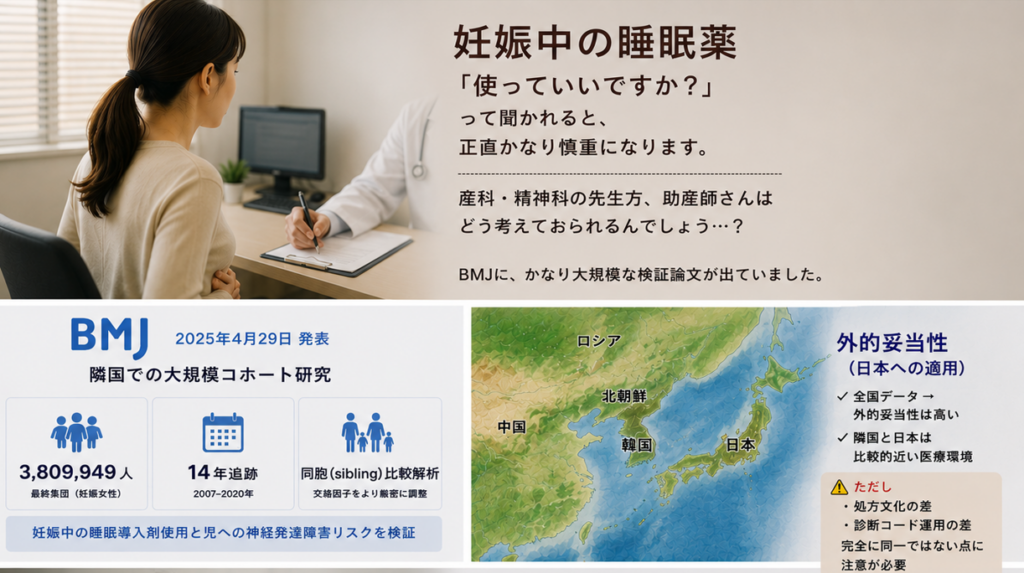
    妊娠中の睡眠薬 「使っていいですか?」 って聞かれると、正直かなり慎重になります。

    精神科、産科、助産師さんはどう考えておられるんでしょう…?

    BMJに、かなり大規模な検証論文が出ていました。

    以下論文を紹介する前に、公的機関のリンクもお示しいたします。

    妊娠中の薬剤相談先

    主治医への相談が基本ですが、
    妊娠中の薬剤使用については、専門相談窓口も存在します。


    Research

    妊娠中のベンゾジアゼピン系薬またはZ薬使用と、児の精神疾患リスク:人口ベースコホート研究 

    Benzodiazepine or Z-hypnotic use during pregnancy and risk of psychiatric disorders in children: population based cohort study 

    原文リンク

    BMJ 2026; 393 doi: https://doi.org/10.1136/bmj-2025-088671 (Published 29 April 2026)

    Cite this as: BMJ 2026;393:e088671

    最終まとめ(GrandPaPP的結論)

    👉 見かけのリスク上昇は“薬の影響”ではなく、母体背景(精神疾患・家族要因)で説明される可能性が高い

    👉 ただし、妊娠後半曝露・長期使用(特にZ薬)は“ゼロリスクではない”

    👉 結論:過度な薬剤忌避は和らげてよいが、漫然投与は支持されない

    管理人の視点

    妊娠中は「胎児への影響が分からないものは避ける」という意識が強い領域です。
    一方で、不眠は実際に多く、薬剤使用も一定数存在します。

    本研究は、その「避けるべきか?」という臨床的疑問に対する検証です。

    PICO整理(事実ベース)

    P(Patient)対象

    韓国NHIDデータベース
    2010年4月1日〜2022年12月31日に出生した全生児
    追跡:出生〜2023年末(最大約14年)

    除外:

    • 生後1年以内の染色体異常
    • 妊娠前90日以内曝露あり・妊娠中なし

    最終集団:n = 3,809,949

    I(Intervention)曝露

    妊娠中に1回以上の処方
    (ベンゾジアゼピン / Z薬)

    曝露解析:

    • 妊娠前半 / 後半 / 両期間
    • 期間(BZD:<2日〜≥6日、Z薬:<14日〜≥30日)
    • 短時間作用 / 長時間作用
    • 新規使用 / 継続使用

    ※用量は評価なし

    C(Comparison)比較

    ① 非曝露群
    ② 過去使用群
    ③ 同胞比較(兄弟内比較)

    👉 段階的に交絡を制御する設計

    O(Outcome)アウトカム

    主要:全精神疾患(ICD-10 F)

    副次:

    • 気分障害、不安障害
    • ASD、ADHD、知的障害など

    👉 臨床的に重要なアウトカム

    内的妥当性(ROBINS-I)

    総合判定

    👉 Moderate

    要点

    • 傾向スコア+過去使用群+同胞比較
      👉 観察研究としては非常に強い設計
    • 残余交絡(妊娠ごとの変動因子など)は残存

    結果の解釈(JAMA Users’ Guides準用)

    効果量

    • 粗解析:HR 1.48
    • 調整後:1.15
    • 同胞比較:0.99(0.94–1.04)

    👉 調整でリスク消失

    精確性

    信頼区間は比較的狭い
    👉 大きなリスク増加は否定的

    絶対リスク

    13歳時点:

    • 曝露 19.2%
    • 非曝露 13.8%

    👉 ただし未調整値のため因果解釈不可

    一貫性

    個別アウトカムでも同胞解析でリスク上昇なし

    👉 主要結果と一致

    例外的所見

    • 妊娠後半曝露
    • 両期間曝露
    • Z薬長期使用

    👉 軽度上昇傾向(有意差なし)

    外的妥当性(日本への適用)

    • 全国データ → 外的妥当性高い
    • 韓国と日本は比較的近い医療環境

    ただし

    • 処方文化差
    • 診断コード運用差

    👉 完全同一ではない

    臨床的含意

    👉 「使うべき/使うべきでない」ではなく

    👉 未治療の母体症状 vs 薬剤リスクの比較材料

    最終まとめ(再掲)

    👉 見かけのリスク上昇は交絡で説明される可能性が高い

    👉 ただし後期・長期使用は注意

    👉 過度な忌避は不要、慎重使用が妥当


    Research

    Use of Benzodiazepines or Z-Hypnotics During Pregnancy and Risk of Psychiatric Disorders in Children: A Population-Based Cohort Study
    Original article link
    BMJ 2026;393 doi: https://doi.org/10.1136/bmj-2025-088671
    (Published 29 April 2026)

    Cite this as: BMJ 2026;393

    Final Summary (GrandPaPP Perspective)

    👉 The apparent increase in risk is likely explained not by the medications themselves, but by maternal background factors such as psychiatric illness and family-related confounding.
    👉 However, exposure during late pregnancy and long-term use (particularly Z-hypnotics) cannot be considered entirely risk-free.
    👉 Conclusion: Excessive fear of medication use during pregnancy may be unnecessary, but routine or prolonged prescribing is not supported.

    Administrator’s Perspective

    Pregnancy is a field in which there is naturally strong concern about avoiding anything with uncertain fetal effects.
    At the same time, insomnia is actually common, and medication use is not rare in clinical practice.

    This study attempts to address the important clinical question:
    “Should these medications truly be avoided?”

    PICO Summary (Fact-Based)

    P (Patient)

    Korean NHID database
    All live births between April 1, 2010 and December 31, 2022
    Follow-up: birth through the end of 2023 (up to approximately 14 years)

    Exclusions:

    • Chromosomal abnormalities diagnosed within the first year of life
    • Exposure within 90 days before pregnancy without exposure during pregnancy

    Final cohort:
    n = 3,809,949

    I (Intervention / Exposure)

    At least one prescription during pregnancy
    (Benzodiazepines or Z-hypnotics)

    Exposure analyses included:

    • Early pregnancy / late pregnancy / both periods
    • Duration
      • BZDs: <2 days to ≥6 days
      • Z-drugs: <14 days to ≥30 days
    • Short-acting vs long-acting agents
    • New users vs continued users

    ※ Dosage was not evaluated.

    C (Comparison)

    ① Unexposed group
    ② Past-use group
    ③ Sibling comparison analysis

    👉 A progressively adjusted design to control for confounding.

    O (Outcome)

    Primary outcome:

    • Any psychiatric disorder (ICD-10 F codes)

    Secondary outcomes:

    • Mood disorders
    • Anxiety disorders
    • ASD
    • ADHD
    • Intellectual disability

    👉 Clinically meaningful outcomes.

    Internal Validity (ROBINS-I)

    Overall judgment:
    👉 Moderate

    Key points:

    • Propensity score adjustment
    • Past-user comparison group
    • Sibling comparison analysis

    👉 An exceptionally strong design for an observational study.

    Residual confounding (such as pregnancy-specific changing factors) may still remain.

    Interpretation of Results
    (Based on the JAMA Users’ Guides framework)

    Effect size:

    • Crude analysis: HR 1.48
    • Adjusted analysis: HR 1.15
    • Sibling comparison: 0.99 (0.94–1.04)

    👉 The apparent risk disappeared after adjustment.

    Precision:
    Confidence intervals were relatively narrow.

    👉 A large increase in risk appears unlikely.

    Absolute risk:
    At age 13:

    • Exposed group: 19.2%
    • Unexposed group: 13.8%

    👉 However, these were unadjusted values and should not be interpreted causally.

    Consistency:
    No increased risk was observed in sibling analyses across individual psychiatric outcomes.

    👉 Consistent with the primary findings.

    Notable findings:

    • Late-pregnancy exposure
    • Exposure during both pregnancy periods
    • Long-term Z-drug use

    👉 Showed slight trends toward increased risk, though without statistical significance.

    External Validity
    (Applicability to Japan)

    • Nationwide database → high external validity
    • Korea and Japan share relatively similar medical environments

    However:

    • Differences in prescribing culture
    • Differences in diagnostic coding practices

    👉 Results may not be perfectly identical across countries.

    Clinical Implications

    👉 The issue is not simply “should” or “should not” these medications be used.

    👉 Rather, clinicians must weigh:
    Untreated maternal symptoms
    vs
    Potential medication-related risks.

    Final Summary (Revisited)

    👉 The observed increase in psychiatric risk is likely largely explained by confounding factors.
    👉 Nevertheless, late-pregnancy exposure and prolonged use warrant caution.
    👉 Excessive avoidance may be unnecessary, but careful and judicious prescribing remains appropriate.

  • –妊娠中に癌が分かったら————————————————–

    この論文が検索結果に表示された理由となる箇所は、Keyword欄および本文中でハイライト表示されます。

    (The content that matched your search query is highlighted in the Keyword section and/or within the article below.)

    研究(オープンアクセス)
    妊娠中に診断されたがん:治療期およびサバイバー期における心理社会的経験の質的研究
    Jenny Harris et al.
    (Supportive Care in Cancer, 2026年4月23日)

    ■ 結論

    妊娠中にがんと診断された女性は、
    治療・出産・育児を同時に経験する中で、
    心理的・身体的・生活面の大きな負担を抱えることがある。

    一方で、適切な支援や医療体制によって、
    その負担を軽減できる可能性が示唆されている。

    👉 多職種による一体的なサポートが重要

    ■ 研究の概要

    • 英国の女性20名へのインタビュー研究
    • 妊娠中〜産後にかけての体験を分析
    • 心理的・社会的な課題に焦点

    ■ 明らかになった6つの側面

    ① 不確実性の中での治療

    • 妊娠により検査や治療に制約があることがある
    • 将来への不安を感じる場面がある

    ② 意思決定の難しさ

    • 治療・出産・授乳などの選択が重なる
    • 限られた情報の中で決断する必要がある

    ③ 妊娠・育児との両立

    • 通院や治療と育児の両立は負担が大きい
    • 産後すぐ治療が始まるケースもある

    ④ 仕事と経済面

    • 休職や収入減少が生じることがある
    • 通院や育児に伴う費用負担も課題

    ⑤ 感情面への影響

    • 不安や戸惑い、葛藤を感じることがある
    • 「嬉しいはずの妊娠」と「病気」の両立に悩む

    ⑥ 支援と回復

    • 孤立感を感じることもある
    • 治療後も不安が続くことがある一方、
      時間とともに整理されていく側面もある

    ■ この研究が示していること

    • 妊娠中のがんは「特別な状況」である
    • 医療だけでなく、心理・生活面の支援も重要
    • 支援のタイミングや方法は柔軟であるべき

    ■ 実臨床へのポイント

    • 情報提供と意思決定支援を丁寧に行う
    • 産科・腫瘍科・心理の連携
    • 家族も含めた支援体制
    • 治療後も継続したフォロー

    ■ 一言まとめ

    👉 「一人で抱えなくてよい状況をつくること」が重要