この論文が検索結果に表示された理由となる箇所は、Keyword欄および本文中でハイライト表示されます。
(The content that matched your search query is highlighted in the Keyword section and/or within the article below.)
トピックス(Topics): 機能予後 (Functional Prognosis), 余命 (Life Expectancy), 予後コミュニケーション (Prognostic Communication), 緩和ケア (Palliative Care), 遺族 (Bereaved Family), 悲嘆 (Grief), Unfinished Business, 終末期コミュニケーション (End-of-Life Communication), ACP
論文情報(Publication Information): Hiratsuka Y, Hamano J, Mori M, Aoyama M, Morita T, Tsuneto S, Miyashita M. Discussion About Life Expectancy and Functional Prognosis in Family Members of Cancer Patients. J Pain Symptom Manage. 2026 Jul;72(1):68-74. doi: 10.1016/j.jpainsymman.2026.03.009.
(An English summary is provided below.)
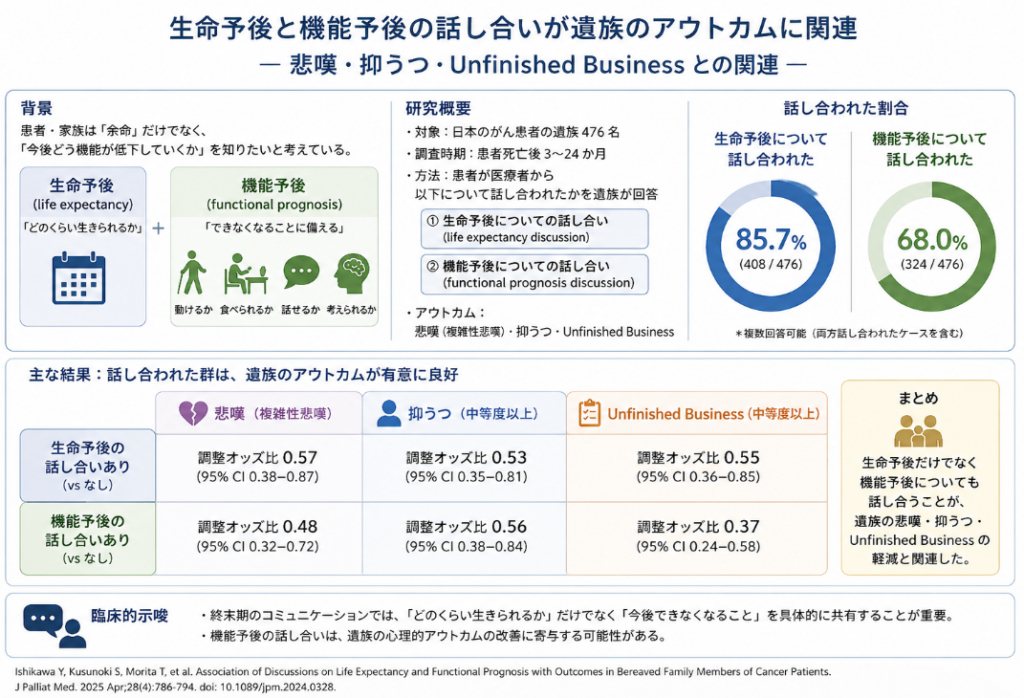
まず「本サイト的まとめ」
「余命を話す」だけではなく、
「これから何ができなくなる可能性があるか」を共有することは、
遺族の悲嘆・抑うつ・“もっとできたかもしれない”感を減らす可能性があります。
日本の緩和ケア病棟遺族582名を解析したこの研究の全国調査では、
- 余命 discussion
- 機能予後 discussion
(動けるか、食べられるか、話せるか等)
が行われていた家族の方が、
- BGQ(複雑性悲嘆)
- PHQ-9(抑うつ)
- UBS-F(unfinished business)
で一貫して良好な結果を示しました。
一方で、本研究は観察研究であり、
communication culture や ACP 実践度などの交絡が大きく、
「discussion が転帰改善を起こした」
とまでは断定できません。
ただ、
“機能予後をどう共有するか”は、緩和ケア実臨床において重要なテーマである事に、管理人も賛同します。
English Summary
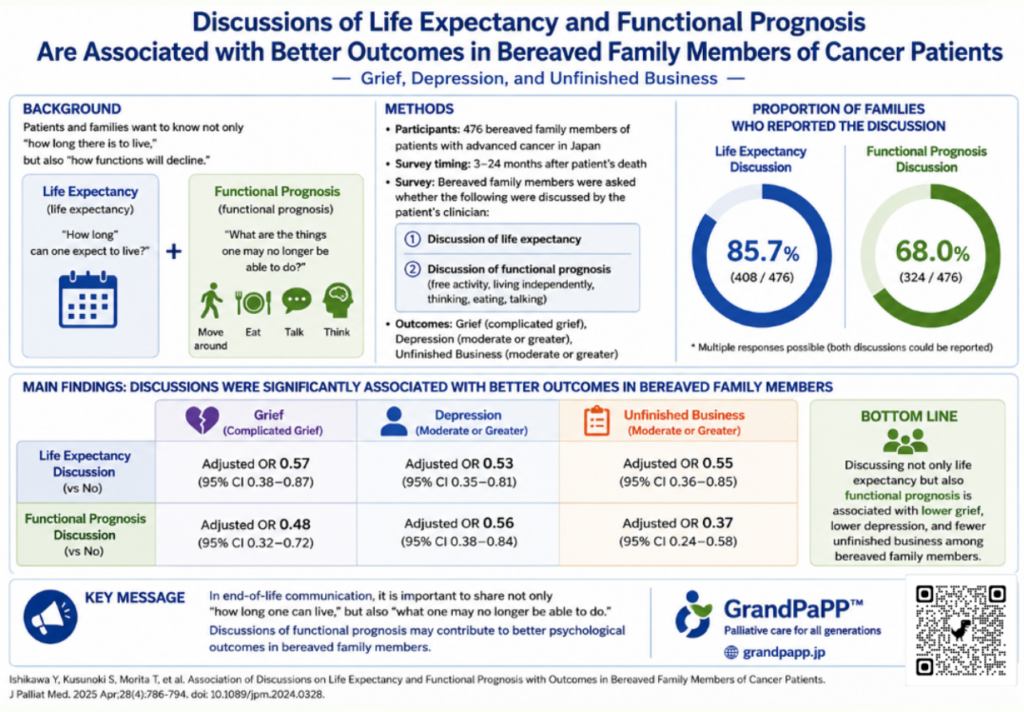
Beyond simply discussing life expectancy, sharing what patients may gradually lose the ability to do in the future may help reduce bereaved families’ grief, depression, and feelings of “unfinished business.”
In this nationwide Japanese study analyzing 582 bereaved family members from palliative care units, families who had discussions about:
- life expectancy
- functional prognosis
(such as mobility, eating, thinking, and communication)
showed consistently better outcomes in:
- BGQ (complicated grief)
- PHQ-9 (depression)
- UBS-F (unfinished business)
However, this was an observational study, and major confounders likely existed, including communication culture and the degree of ACP practice.
Therefore, the study cannot conclude that prognostic discussions themselves directly improved outcomes.
Still, the administrator agrees that:
“How we communicate functional prognosis”
is an important issue in real-world palliative care practice.
(An English translation of the discussion is provided below the Japanese text.)
検討内容
P(Patient)
対象患者・対象者:
- 緩和ケア病棟で死亡したがん患者の遺族
- 全国規模の遺族調査(J-HOPE 5 study)の事前計画解析
適格基準:
- 参加施設の緩和ケア病棟で、
2022年2月1日〜2024年1月31日に、
がんで死亡した患者 - 患者年齢:
20歳以上 - 遺族年齢:
20歳以上
除外基準:
- 緩和ケア病棟入院後3日以内死亡
- 連絡不能または特定不能な遺族
- 主治医・看護師が
「重度心理的苦痛あり」
と判断した遺族 - 認知障害・視覚障害などで
自記式質問票回答不能な参加者
患者背景:
- 平均年齢:
77.6歳 - 緩和ケア病棟死亡例
- 家族の多くは子または配偶者
━━━━━━━━━━
I(Intervention)
介入:
「余命についての話し合い」
および
「機能予後についての話し合い」
を、患者担当臨床医と家族の間で行ったこと。
機能予後 discussion の内容:
- 自由な活動(移動)
- 自立生活
- 思考
- 食事
- 会話
用量・期間・タイミング:
- 薬剤介入ではないため用量設定なし
- 「患者死亡までの全医療経過」
を振り返って回答 - discussion の具体的回数・時期・長さは記載なし
評価:
介入というより、
「予後コミュニケーションの有無」
を exposure として観察した研究です。
━━━━━━━━━━
C(Comparison)
比較群:
余命 discussion
- With discussion
(話し合いあり)
vs
- Without discussion
(話し合いなし)
機能予後 discussion
- 機能予後について
何らかの discussion があった群
vs
- なかった群
比較として妥当か:
一定の妥当性はあります。
ただし、
- 無作為化なし
- 観察研究
- discussion を行える関係性・病状・施設文化
などの交絡が強く入りうるため、
「discussion が転帰改善を起こした」
とは断定できません。
特に、
- communication が良い医療チーム
- ACP が進んでいる家族
- 元々適応力の高い家族
が、
discussion 群に多かった可能性があります。
━━━━━━━━━━
O(Outcome)
主要評価項目:
明確な “primary outcome” 記載はありません。
実際に評価したアウトカム:
① 複雑性悲嘆
Brief Grief Questionnaire(BGQ)
② 抑うつ
PHQ-9
③ Unfinished business
UBS-F
結果:
discussion 群の方が、
- 悲嘆
- 抑うつ
- やり残し感
が少なかった。
患者にとって重要なアウトカムか:
非常に重要です。
特に、
- 遺族悲嘆
- depression
- unfinished business
は、
緩和ケア・終末期ケアにおける
実臨床上きわめて重要なアウトカムです。
単なる satisfaction ではなく、
「遺族の精神的転帰」
を評価している点は臨床的意義があります。
━━━━━━━━━━
このPICOの明確性・実臨床適用性
━━━━━━━━━━
臨床疑問は比較的明確です。
特に、
「余命だけでなく、
機能低下について話すことに意味があるのか?」
という問いは、
緩和ケア実臨床に直結しています。
また、
- 食べられなくなる
- 動けなくなる
- 話せなくなる
など、
家族が実際に困る変化
に焦点を当てている点は、
非常に臨床的です。
一方で、
- 観察研究
- causal inference 不可
- discussion 内容の標準化なし
- timing 不明
という限界は大きく、
「どう説明すべきか」
まで踏み込める研究ではありません。
ただし、
「機能予後の説明は、
家族ケアとして重要かもしれない」
という実臨床への示唆は強い研究です。
【ROBINS-Iによる内的妥当性評価】
本研究は無作為化比較試験ではなく、全国規模遺族調査の事前計画解析による観察研究であるため、RoB 2 ではなく ROBINS-I(Risk Of Bias In Non-randomized Studies – of Interventions)による評価が適切である。
━━━━━━━━━━
- Bias due to confounding
(交絡によるバイアス)
━━━━━━━━━━
判定:
Serious risk
根拠:
本研究では、
- 「予後説明が行われたか」
- 「機能予後説明が行われたか」
によって自然発生的に群分けされている。
無作為化は行われていない。
懸念点:
以下の重要交絡因子が制御されていない。
- 医療チームの communication 能力
- ACP実施文化
- 家族関係
- 元々の精神的適応力
- 病状理解度
- 病勢
- 家族の希望
これらは、
「discussion が行われるか」
にも、
「遺族悲嘆」
にも影響しうる。
本研究最大の限界である。
━━━━━━━━━━
2. Bias in selection of participants
(参加者選択バイアス)
━━━━━━━━━━
判定:
Serious risk
根拠:
- 回答率58.9%
- complete case analysis
- 重度心理的苦痛例除外
懸念点:
- 強い悲嘆を有する遺族
- 回答困難な遺族
が除外されている可能性がある。
また、
非回答者との違いは不明である。
selection bias の可能性が高い。
━━━━━━━━━━
3. Bias in classification of interventions
(介入分類バイアス)
━━━━━━━━━━
判定:
Moderate risk
根拠:
discussion の有無は、
遺族自己申告で評価された。
懸念点:
- 「discussion」が何を意味するか曖昧
- 具体的内容不明
- 回数不明
- timing 不明
であり、
classification の誤差が入りうる。
━━━━━━━━━━
4. Bias due to deviations from intended interventions
(意図した介入からの逸脱)
━━━━━━━━━━
判定:
Moderate risk
根拠:
discussion の標準化記載なし。
懸念点:
- 説明内容
- 説明者
- 家族理解度
- 他の心理支援
が統制されていない。
実際には、
communication quality 全体を反映している可能性がある。
━━━━━━━━━━
5. Bias due to missing data
(欠測データバイアス)
━━━━━━━━━━
判定:
Serious risk
根拠:
- 回答欠測あり
- complete case analysis 実施
懸念点:
欠測がランダムとは限らない。
特に、
精神的負担が強い遺族ほど回答しない可能性がある。
━━━━━━━━━━
6. Bias in measurement of outcomes
(アウトカム測定バイアス)
━━━━━━━━━━
判定:
Moderate risk
根拠:
- BGQ
- PHQ-9
- UBS-F
など validated scale 使用。
懸念点:
一方で、
- retrospective self-report
- 死別後2–25か月後評価
であり、recall bias が入りうる。
━━━━━━━━━━
7. Bias in selection of the reported result
(選択的報告バイアス)
━━━━━━━━━━
判定:
Some concerns
根拠:
“pre-planned analysis” 記載あり。
懸念点:
- protocol 詳細不十分
- primary outcome 明記なし
- multiplicity adjustment 記載なし
であり、
選択的報告の可能性を完全には否定できない。
━━━━━━━━━━
Overall ROBINS-I judgement
━━━━━━━━━━
Overall judgement:
Serious risk of bias
理由:
特に、
- 交絡
- selection bias
- missing data bias
の影響が大きい。
したがって、
「予後 discussion が遺族転帰を改善した」
という因果推論には限界がある。
一方で、
- 全国規模
- validated scale 使用
- 一貫した方向性
は本研究の強みであり、
「機能予後説明は遺族ケアに重要かもしれない」
という仮説生成研究としての臨床的価値は高い。
結果の重要性:JAMA Users’ Guides “What are the results?” に沿った評価
1. 主要アウトカムの効果量
本研究では明確な主要アウトカムの指定は記載されていない。評価された主なアウトカムは、BGQ、PHQ-9、UBS-Fである。
余命に関する話し合いあり群では、なし群と比べて、
- BGQ:4.03 vs 5.04、平均差 1.01
- PHQ-9:4.39 vs 5.92、平均差 1.53
- UBS-F総得点:42.12 vs 47.55、平均差 5.42
であった。
機能予後に関する話し合いあり群では、なし群と比べて、
- BGQ:3.91 vs 4.78、平均差 0.86
- PHQ-9:4.08 vs 5.76、平均差 1.68
- UBS-F総得点:41.57 vs 46.20、平均差 4.63
であった。
解釈:いずれも、話し合いあり群で悲嘆、抑うつ、unfinished business が低い方向であった。
臨床的意義:効果量は大きいとは言いにくいが、遺族の心理的転帰という重要アウトカムで一貫して良い方向を示している。
2. 95%信頼区間から見た精確性
余命の話し合いでは、
- BGQ平均差:1.01(95%CI 0.42–1.59)
- PHQ-9平均差:1.53(95%CI 0.23–2.84)
- UBS-F総得点平均差:5.42(95%CI 2.03–8.82)
機能予後の話し合いでは、
- BGQ平均差:0.86(95%CI 0.44–1.29)
- PHQ-9平均差:1.68(95%CI 0.71–2.64)
- UBS-F総得点平均差:4.63(95%CI 2.10–7.16)
解釈:信頼区間はいずれも0をまたがず、方向性は比較的安定している。
臨床的意義:ただし観察研究であり、精確な因果効果の推定とは言えない。
3. p値ではなく臨床的に意味のある差か
論文では、話し合いあり群で悲嘆、抑うつ、unfinished business が良好であったと報告されている。
解釈:PHQ-9の差は約1.5–1.7点であり、個人レベルで明確な臨床差とまでは言いにくい。一方、遺族全体の集団レベルでは意味を持ちうる。
臨床的意義:特に unfinished business の低下は、終末期コミュニケーションの質に直結するため、緩和ケアでは重要である。
4. 絶対リスク差・相対リスク・NNT/NNH
本研究の主要結果は連続尺度の平均値比較であり、イベント発生率として提示されていない。
したがって、
- 絶対リスク差:算出困難
- 相対リスク:算出困難
- NNT/NNH:算出困難
臨床的意義:NNTで「何人に説明すれば1人の悲嘆を防げる」とは表現できない。
5. 有害事象とのバランス
本研究では、予後や機能予後の話し合いによる有害事象は評価されていない。
臨床的意義:予後説明には不安増強や心理的負担の可能性もあるが、この論文からは利益・害のバランスは判断困難。
6. 主要アウトカムと副次アウトカムの一貫性
BGQ、PHQ-9、UBS-Fのいずれも、話し合いあり群で良好な方向を示している。
解釈:結果の方向性は一貫している。
臨床的意義:余命だけでなく、機能予後の話し合いも、遺族の心理的転帰と関連している可能性がある。
診療を変えるほど重要か
この研究だけで「予後説明が遺族アウトカムを改善する」と因果的に結論することはできない。しかし、余命だけでなく、動けるか、食べられるか、話せるかといった機能予後について話し合うことが、遺族の悲嘆・抑うつ・やり残し感の少なさと一貫して関連していた点は臨床的に重要である。診療を大きく変えるRCTではないが、緩和ケア実践において「機能予後も意識して家族と話す」ことを支持する仮説生成的根拠として有用である。
外的妥当性:JAMA Users’ Guides の3点
1. 患者は自分の臨床現場の患者と似ているか
根拠
対象は、日本の緩和ケア病棟で死亡したがん患者の遺族。患者平均年齢77.6歳、遺族平均年齢62.9歳で、子・配偶者が中心。
日本の総合病院での注意点
日本の緩和ケア病棟・がん診療には比較的近い。ただし、緩和ケア病棟に4日以上入院した患者が対象であり、一般病棟、ICU、外来、在宅、急変死亡にはそのまま外挿しにくい。
診療を変えるべきか
大きな制度変更ではなく、「余命だけでなく機能予後も家族と話す」意識づけには使える。
2. 臨床的に重要なアウトカムはすべて評価されているか
根拠
評価アウトカムは、複雑性悲嘆(BGQ)、抑うつ(PHQ-9)、unfinished business(UBS-F)。いずれも遺族にとって重要な心理的アウトカム。
日本の総合病院での注意点
重要な遺族アウトカムは評価されている。一方で、患者本人の不安、希望、理解度、医療者との信頼関係、説明による害、家族満足度、医療資源使用などは十分評価されていない。
診療を変えるべきか
「遺族の悲嘆・後悔を減らす可能性がある」という視点で、説明内容を見直す価値はある。ただし、説明すれば必ず良いとは言えない。
3. 利益は害やコストに見合うか
根拠
余命・機能予後の話し合いがあった群では、BGQ、PHQ-9、UBS-Fが一貫して良好だった。
一方、有害事象や説明による心理的負担は直接評価されていない。
日本の総合病院での注意点
コストは主に時間・説明技術・チーム内共有。薬剤や機器は不要。ただし、不適切な伝え方は不安や絶望感を増やす可能性があるため、ACP・看護師同席・段階的説明が望ましい。
診療を変えるべきか
低コストで実行可能だが、機械的な予後告知ではなく、「これから何ができなくなる可能性があるか」を家族の受け止めに合わせて話す形が現実的。
明日から適用できるか
適用できます。
ただし、「余命をはっきり告げる」だけではなく、
動けるか、食べられるか、話せるか、意識が保てるか
を、家族が準備できる形で段階的に共有する、という実践が妥当です。
この論文だけで診療方針を大きく変えるほどの因果的根拠ではありませんが、総合病院の緩和ケア実践を少し改善する根拠としては十分使えます。
Discussion
P (Patient)
Target patients/participants:
Bereaved family members of cancer patients who died in palliative care units.
Pre-planned analysis of a nationwide bereavement survey (J-HOPE 5 study).
Eligibility criteria:
Patients who died of cancer in participating palliative care units between February 1, 2022, and January 31, 2024.
Patient age:
≥20 years
Bereaved family member age:
≥20 years
Exclusion criteria:
Death within 3 days after admission to the palliative care unit
Bereaved family members who could not be identified or contacted
Bereaved family members judged by physicians or nurses to have severe psychological distress
Participants unable to complete self-administered questionnaires because of cognitive impairment, visual impairment, etc.
Patient characteristics:
Mean age:
77.6 years
All patients died in palliative care units.
Most family members were children or spouses.
━━━━━━━━━━
I (Intervention)
Intervention:
Discussions regarding:
“Life expectancy”
and
“Functional prognosis”
between the patient’s clinicians and family members.
Content of functional prognosis discussions:
Mobility/free activity
Independent living
Thinking/cognition
Eating
Conversation/communication
Dose, duration, timing:
Not a drug intervention; therefore, no dosing was applicable.
Participants answered retrospectively regarding the entire clinical course until the patient’s death.
The specific number, timing, and duration of discussions were not reported.
Evaluation:
Rather than a true intervention study, this was an observational study evaluating the presence or absence of prognostic communication as an exposure.
━━━━━━━━━━
C (Comparison)
Comparison groups:
Life expectancy discussions
With discussion
vs
Without discussion
Functional prognosis discussions
With any functional prognosis discussion
vs
Without discussion
Validity of comparison:
The comparison has some validity.
However:
No randomization
Observational design
Potential confounding by:
relationship quality
disease severity
institutional culture
Therefore, it cannot be concluded that the discussions themselves caused improved outcomes.
In particular, the discussion group may have included more:
medical teams with better communication skills
families with more advanced ACP involvement
families with better baseline coping abilities
━━━━━━━━━━
O (Outcome)
Primary outcome:
No clearly defined “primary outcome” was specified.
Outcomes actually evaluated:
- Complicated grief
Brief Grief Questionnaire (BGQ)
- Depression
PHQ-9
- Unfinished business
UBS-F
Results:
The discussion groups showed lower:
grief
depression
unfinished business
Importance to patients/families:
These are highly important outcomes.
In particular:
bereavement grief
depression
unfinished business
are clinically critical outcomes in palliative and end-of-life care.
Importantly, the study evaluated:
“psychological outcomes of bereaved family members”
rather than simple satisfaction measures.
━━━━━━━━━━
Clarity of the PICO and Clinical Applicability
━━━━━━━━━━
The clinical question is relatively clear.
In particular:
“Is there value not only in discussing life expectancy,
but also in discussing future functional decline?”
is directly relevant to real-world palliative care practice.
The study focused on changes families actually struggle with, such as:
becoming unable to eat
becoming unable to move
becoming unable to speak
which makes the study highly clinically relevant.
On the other hand, major limitations include:
observational design
inability to establish causal inference
lack of standardization of discussions
unclear timing of discussions
Therefore, the study cannot determine exactly how prognostic information should be communicated.
Nevertheless, the study strongly suggests that:
“Discussing functional prognosis may be important as part of family care.”
━━━━━━━━━━
Internal Validity Assessment Using ROBINS-I
Because this study was an observational pre-planned analysis of a nationwide bereavement survey rather than a randomized controlled trial, ROBINS-I (Risk Of Bias In Non-randomized Studies – of Interventions) is more appropriate than RoB 2.
━━━━━━━━━━
- Bias due to confounding
━━━━━━━━━━
Judgment:
Serious risk
Rationale:
Participants were naturally divided according to whether:
life expectancy discussions occurred
functional prognosis discussions occurred
No randomization was performed.
Major uncontrolled confounders include:
communication skills of the medical team
ACP culture
family relationships
baseline psychological resilience
understanding of illness
disease severity
family preferences
These factors could influence both:
whether discussions occurred
and
bereavement outcomes
This represents the greatest limitation of the study.
━━━━━━━━━━
- Bias in selection of participants
━━━━━━━━━━
Judgment:
Serious risk
Rationale:
Response rate:
58.9%
Complete case analysis performed
Bereaved family members with severe psychological distress were excluded
Concerns:
Families with severe grief or difficulty responding may have been excluded.
Differences between responders and non-responders are unknown.
Selection bias is therefore likely.
━━━━━━━━━━
- Bias in classification of interventions
━━━━━━━━━━
Judgment:
Moderate risk
Rationale:
Presence or absence of discussions was based on self-report by bereaved family members.
Concerns:
The meaning of “discussion” was ambiguous.
Specific content unknown
Frequency unknown
Timing unknown
Potential misclassification may therefore exist.
━━━━━━━━━━
- Bias due to deviations from intended interventions
━━━━━━━━━━
Judgment:
Moderate risk
Rationale:
No standardization of discussions was reported.
Concerns:
Explanation content
Who conducted discussions
Family understanding
Other psychological support
were not controlled.
The findings may therefore reflect overall communication quality rather than the discussions themselves.
━━━━━━━━━━
- Bias due to missing data
━━━━━━━━━━
Judgment:
Serious risk
Rationale:
Missing responses existed.
Complete case analysis was used.
Concerns:
Missingness may not have been random.
Families with greater psychological distress may have been less likely to respond.
━━━━━━━━━━
- Bias in measurement of outcomes
━━━━━━━━━━
Judgment:
Moderate risk
Rationale:
Validated scales were used:
BGQ
PHQ-9
UBS-F
Concerns:
Retrospective self-report
Assessment performed 2–25 months after bereavement
Recall bias may therefore exist.
━━━━━━━━━━
- Bias in selection of the reported result
━━━━━━━━━━
Judgment:
Some concerns
Rationale:
The study was described as a “pre-planned analysis.”
Concerns:
Insufficient protocol detail
No clearly defined primary outcome
No multiplicity adjustment reported
Selective reporting therefore cannot be fully excluded.
━━━━━━━━━━
Overall ROBINS-I Judgment
━━━━━━━━━━
Overall judgment:
Serious risk of bias
Reasons:
Particularly strong concerns regarding:
confounding
selection bias
missing data bias
Therefore, causal conclusions such as:
“Prognostic discussions improved bereavement outcomes”
cannot be firmly established.
However, strengths of the study include:
nationwide scale
use of validated scales
consistent direction of findings
Thus, the study has substantial clinical value as a hypothesis-generating study suggesting that:
“Discussion of functional prognosis may be important in bereaved family care.”
━━━━━━━━━━
Importance of the Results:
Evaluation Based on JAMA Users’ Guides “What are the results?”
- Magnitude of effect
No clearly defined primary outcome was reported.
Main outcomes evaluated included BGQ, PHQ-9, and UBS-F.
Life expectancy discussion group vs no discussion group:
BGQ:
4.03 vs 5.04
Mean difference: 1.01
PHQ-9:
4.39 vs 5.92
Mean difference: 1.53
UBS-F total score:
42.12 vs 47.55
Mean difference: 5.42
Functional prognosis discussion group vs no discussion group:
BGQ:
3.91 vs 4.78
Mean difference: 0.86
PHQ-9:
4.08 vs 5.76
Mean difference: 1.68
UBS-F total score:
41.57 vs 46.20
Mean difference: 4.63
Interpretation:
All outcomes favored the discussion groups, with lower grief, depression, and unfinished business.
Clinical significance:
Although the effect sizes were not large, the consistent improvement across psychologically important bereavement outcomes is clinically meaningful.
- Precision based on 95% confidence intervals
Life expectancy discussions:
BGQ mean difference:
1.01 (95% CI 0.42–1.59)
PHQ-9 mean difference:
1.53 (95% CI 0.23–2.84)
UBS-F total score mean difference:
5.42 (95% CI 2.03–8.82)
Functional prognosis discussions:
BGQ mean difference:
0.86 (95% CI 0.44–1.29)
PHQ-9 mean difference:
1.68 (95% CI 0.71–2.64)
UBS-F total score mean difference:
4.63 (95% CI 2.10–7.16)
Interpretation:
Confidence intervals did not cross zero, suggesting relatively consistent directionality.
Clinical significance:
However, because this was an observational study, these estimates should not be interpreted as precise causal effects.
- Clinical significance rather than statistical significance
The study reported lower grief, depression, and unfinished business in the discussion groups.
Interpretation:
The PHQ-9 differences of approximately 1.5–1.7 points may not represent a clearly meaningful clinical difference at the individual level.
However, they may still be meaningful at the population level.
Clinical significance:
In particular, reduction in unfinished business is important in palliative care because it is closely related to the quality of end-of-life communication.
- Absolute risk reduction, relative risk, NNT/NNH
The primary analyses involved comparisons of continuous scale scores rather than event rates.
Therefore:
Absolute risk reduction:
Not calculable
Relative risk:
Not calculable
NNT/NNH:
Not calculable
Clinical significance:
The findings cannot be translated into statements such as:
“How many families need prognostic discussions to prevent one case of severe grief.”
- Balance of benefits and harms
Potential harms of prognostic discussions were not evaluated.
Clinical significance:
While prognostic discussions may potentially increase anxiety or emotional burden, this study cannot determine the balance between benefit and harm.
- Consistency between outcomes
BGQ, PHQ-9, and UBS-F all consistently favored the discussion groups.
Interpretation:
The direction of findings was consistent.
Clinical significance:
Not only life expectancy discussions, but also functional prognosis discussions may be associated with better psychological outcomes among bereaved family members.
Is this important enough to change practice?
This study alone cannot causally conclude that prognostic discussions improve bereavement outcomes.
However, the finding that discussing functional prognosis — such as whether the patient may still be able to move, eat, or speak — was consistently associated with lower grief, depression, and unfinished business is clinically important.
This is not a practice-changing randomized trial, but it provides useful hypothesis-generating evidence supporting greater attention to functional prognosis discussions in palliative care practice.
━━━━━━━━━━
External Validity:
Three Questions from JAMA Users’ Guides
- Are the patients similar to those in one’s own clinical setting?
Rationale:
Participants were bereaved family members of cancer patients who died in Japanese palliative care units.
Mean patient age:
77.6 years
Mean family age:
62.9 years
Most family members were spouses or children.
Considerations for Japanese general hospitals:
The population is relatively similar to Japanese palliative oncology settings.
However, the study included only patients hospitalized in palliative care units for ≥4 days.
Therefore, extrapolation to:
general wards
ICUs
outpatient settings
home care
sudden deterioration/death
should be done cautiously.
Should practice change?
Not through major institutional reform, but it may encourage clinicians to discuss not only life expectancy but also functional prognosis with families.
- Were all clinically important outcomes considered?
Rationale:
Evaluated outcomes included:
complicated grief (BGQ)
depression (PHQ-9)
unfinished business (UBS-F)
All are clinically important bereavement outcomes.
Considerations for Japanese general hospitals:
Important bereavement outcomes were evaluated.
However, the study did not adequately assess:
patient anxiety
hope
illness understanding
trust in clinicians
potential harms of discussions
family satisfaction
healthcare resource utilization
Should practice change?
There is value in reconsidering prognostic communication from the perspective of potentially reducing grief and regret among bereaved families.
However, communication does not automatically lead to positive outcomes.
- Do the benefits outweigh the harms and costs?
Rationale:
Groups with life expectancy and functional prognosis discussions consistently showed better BGQ, PHQ-9, and UBS-F scores.
However, psychological harms of discussions were not directly evaluated.
Considerations for Japanese general hospitals:
Costs mainly involve:
time
communication skills
team coordination
No medications or devices are required.
However, inappropriate communication may increase anxiety or hopelessness.
Therefore:
ACP
nurse participation
stepwise communication
are desirable.
Should practice change?
This is a low-cost and feasible intervention.
However, rather than mechanically disclosing prognosis, a more realistic approach is to discuss:
“What the patient may gradually become unable to do”
in accordance with the family’s readiness and coping ability.
Can this be applied tomorrow?
Yes.
However, the goal is not simply to “clearly disclose life expectancy.”
Rather, a reasonable approach is to gradually share information that helps families prepare for changes such as:
mobility
eating ability
speech
consciousness
Although this paper does not provide strong causal evidence sufficient to dramatically change clinical policy, it does provide useful support for modest improvements in palliative care communication practice in general hospitals.